
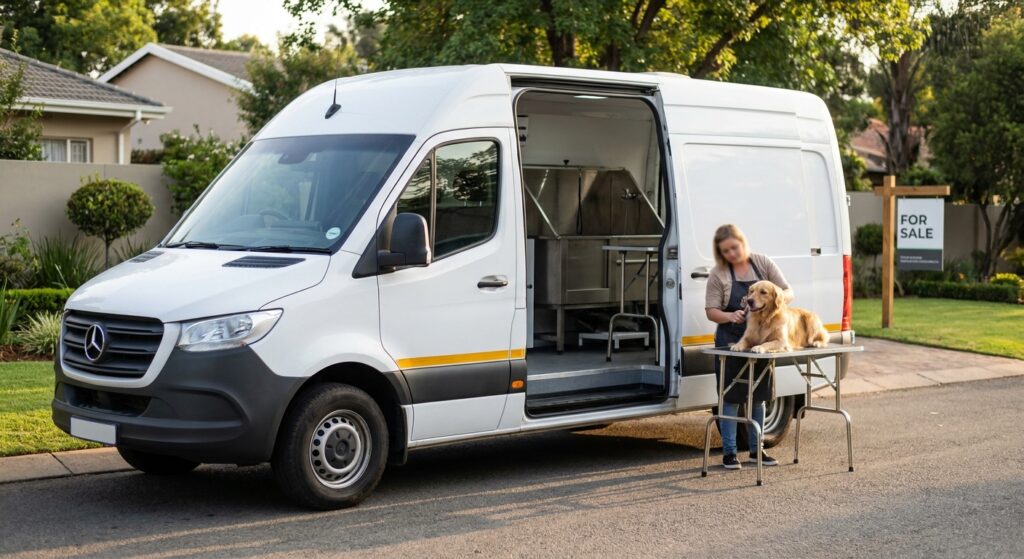
 When evaluating a mobile pet grooming business for sale in Gauteng, your due diligence must prioritize the physical condition of the conversion, the consistency of the recurring client base, load-shedding resilience, and regulatory compliance. A high-performing asset typically generates R40,000 to R80,000 in monthly revenue per unit, with fuel and maintenance costs usually accounting for 15% to 20% of gross turnover. Ensuring these metrics are sustainable is the most effective way to secure a profitable acquisition.
Financial and Legal Due Diligence Checklist
To mitigate risk, we recommend evaluating the following factors before finalizing any purchase agreement.
| Factor | What to Check | Red Flag |
|---|---|---|
| Vehicle Condition | Service history and mechanical health of the van. | Visible rust on conversion or engine cooling issues. |
| Client Retention | Percentage of clients on recurring 4–6 week cycles. | Client churn rate exceeding 10% per quarter. |
| Route Efficiency | Kilometers traveled per grooming appointment. | High fuel spend relative to revenue (over 25%). |
| Regulatory Status | National Road Traffic Act compliance. | Unregistered or uncertified vehicle conversions. |
| Waste Management | Municipal wastewater disposal protocols. | Lack of greywater filtration or legal disposal logs. |
Why Load-Shedding Resilience Matters for Valuation
In the current Gauteng market, a mobile unit’s ability to operate independently of the grid is a critical value driver. Businesses that have invested in lithium battery banks or high-capacity silent generators maintain higher revenue consistency than fixed-location salons. When reviewing the financials, correlate the business’s reported revenue with the specific periods of Stage 4+ load-shedding to confirm that the grooming schedule remained stable. A well-equipped van with modern power management systems commands a premium because it guarantees revenue continuity for the new owner.
Growth and Operational Scalability
Scalability in this sector is driven by route density. We prioritize businesses that operate within specific, high-income gated estates, as this reduces transit time and maximizes the number of appointments per day. A robust business valuation should not only account for the equipment assets but also the value of the established digital booking systems and the reputation of the service within the target corridors. By analyzing the current booking software, you can verify if the business is operating at peak capacity or if there is untapped growth potential through better route management.
If you are currently evaluating an acquisition and want to ensure you are paying a fair market price based on verified financials, reach out to our team today for an expert consultation.
You should look for a documented history of vehicle maintenance, high recurring client retention rates (at least 70-80%), proof of compliance with municipal waste regulations, and reliable on-board power systems that ensure independence from the national grid.
FAQ’s
How much does a mobile pet grooming business for sale cost in Gauteng?
Prices vary significantly based on the age and condition of the vehicle, with well-maintained, fully-fitted vans often selling between R250,000 and R600,000. Higher-end valuations are assigned to businesses with established route density, digital booking history, and proven monthly turnover. You can browse more opportunities at our platform for business listings.
Is a special driver license required for mobile grooming vans?
Most standard grooming van conversions fall under the Code B (Light Motor Vehicle) or Code EB (Light Motor Vehicle with trailer) categories as defined by the National Road Traffic Act. Always verify the Gross Vehicle Mass (GVM) of the specific vehicle to ensure your license remains valid.
How does load-shedding affect mobile grooming operations?
Unlike brick-and-mortar salons, mobile units equipped with inverter systems or silent generators can continue to operate during power outages. This provides a significant competitive advantage and protects the business from the revenue volatility that traditional shops face during blackouts.